Clash of Forms

Katarzyna Jackowska
Szczecin Philharmonic
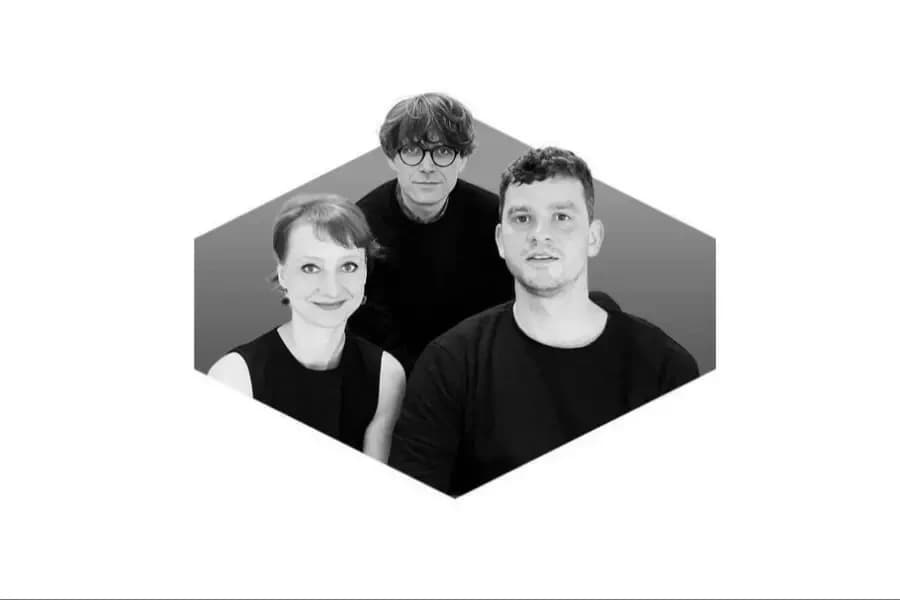
The piano trio is one of the most demanding forms of chamber music-it requires equal balance, attentive dialogue, and a shared pulse. This evening shows how differently these conditions can be fulfilled-and what can be drawn from that balance.
Emanuel Kania's piano trio is a rarely performed piece. Yet, it is fully representative of Polish Romanticism in the second half of the 19th century. Kania-now largely forgotten-was a well-known figure in his time: he studied in Leipzig, was friends with Moniuszko, and was active as both a performer and teacher. His trio displays a strong sense of form and lyrical qualities typical of the era. It avoids experimentation, focusing instead on lyricism, clear structure, and well-crafted dialogue between instruments.
Andrzej Czajkowski's piano trio sounds completely different-one of his most important chamber works. Composed between 1957 and 1958, shortly after his success as a pianist in Brussels and Warsaw but before his complete turn toward composition, it reflects two opposing forces: a respect for classical proportions and a desire to break beyond them. The trio has a compact form, but Czajkowski's musical language is sharp, sometimes brutal, and constantly charged with emotional tension. It isn't easy to classify-and that makes it all the more worthwhile to listen to.
Closing the concert is Mieczysław Weinberg's Piano Trio No. 2, a mature work written in 1945, marked by the experience of war and escape. Weinberg doesn't illustrate events, but instead tries to express what happens inside a person after a catastrophe. The trio consists of four movements, each bringing a distinct energy, ranging from march-like rhythms to a subdued finale. It is music full of dramatic gestures but also moments of silence, where a modernist texture meets a simple theme played almost in a whisper.
Although all three trios were composed nearly a hundred years apart, they share one thing: a belief in form as a way of thinking. With Kania, it's clear and classical; with Czajkowski, tense and rough; with Weinberg, dramatic and multilayered. Heard together, they form a story about how differently one can speak of the same thing-the relationship of three instruments that refuse to play solo.